





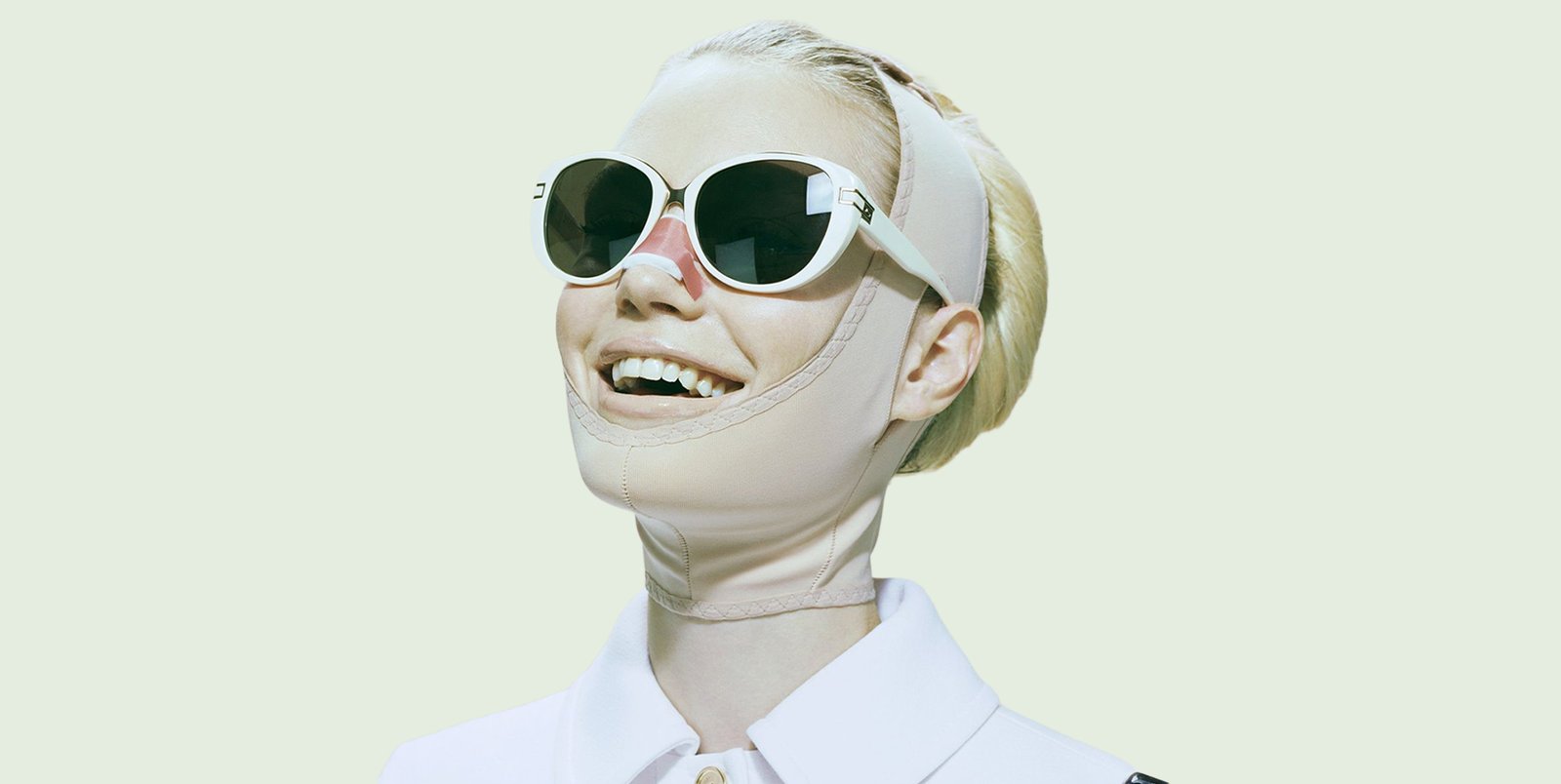
It’s been said that aging gracefully is a lost art. Surgically changing one’s appearance in a dramatic way was once upon a time something we only associated with Dolly Parton and Michael Jackson. But nowadays, it seems everyone and their mother is getting something done, and not just once but consistently. Everyone’s trying to fix themselves with threads, injections, tweakments, filters, Ozempic and endless “preventative maintenance,” and it’s starting to feel obsessive. The fixation is so strong that even knowing the risks doesn’t slow anyone down. New procedures and injectables are appearing faster than they can be properly vetted. The conversation around it is extreme—either “age naturally” or “just get Botox.” But we’re not in either camp. Just here to ask a simple question:
The easy answer to explain this disturbing phenomenon is pure vanity—that and being victim to the media’s portrayal of the ideal face and physique, whether of 20 or 60 years of age. But, really, there aren’t ever clear-cut answers to questions involving human behavior. Perhaps since the advent of the smartphone, we’ve accumulated decades-worth of too many photographs of ourselves and it’s become too unsettling for us to see our faces change over time. Or perhaps it’s a question of grieving our innocent carefree youth. Maybe we’re clinging to a sliver of hope, envisioning our current (married, professional, or social) life as better if our appearance were that much closer to “perfect?” Or maybe this is just our way (the modern way) of not facing a deeper insecurity we feel in living the human existence?
Every gender, every generation, everyone is being sucked into this vortex of pressure to look a certain way. With social media now accessible to children, the age is becoming alarmingly and devastatingly younger and younger. We’re all playing along and accepting that we need to be somebody more attractive, no matter how attractive we may already be. But is different better? And will different really make us love ourselves more? We’ve become so caught up in a constant “magnifying glass” view of ourselves that we can’t step away and see ourselves with fresh eyes. We self-defeatingly catch ourselves at our most vulnerable and least attractive moments in order to justify this need for a change. We neglect the fact that social media portrayals of ideal beauty don’t depict the everyday quality of life. Social media only reveals snapshots of climactic moments meticulously produced using carefully prepared makeup, hair, angles, lighting, and filters. We don’t take into account that the subjects of these depictions are NOT in their daily reality. We don’t realize that our day-ins and day-outs do not always demonstrate the best version of ourselves. There’ll be days our haggard stressed selves will emanate through our expression and skin. And then there’ll be good-hair, good-mood and good-face days that’ll suddenly allow us to catch a relieving glimpse of ourselves and like what we see.
We’ve become so caught up in a constant “magnifying glass” view of ourselves that we can’t step away and see ourselves with fresh eyes. We self-defeatingly catch ourselves at our most vulnerable and least attractive moments in order to justify this need for a change. We neglect the fact that social media portrayals of ideal beauty don’t depict the everyday quality of life. Social media only reveals snapshots of climactic moments meticulously produced using carefully prepared makeup, hair, angles, lighting, and filters. We don’t take into account that the subjects of these depictions are NOT in their daily reality. We don’t realize that our day-ins and day-outs do not always demonstrate the best version of ourselves. There’ll be days our haggard stressed selves will emanate through our expression and skin. And then there’ll be good-hair, good-mood and good-face days that’ll suddenly allow us to catch a relieving glimpse of ourselves and like what we see.
It’s a torturous love/hate dichotomy: if we do something to improve our flaws, we’ll love ourselves more; and if we don’t, the hate will perpetuate and fester.
But our “imperfections” are actually what make us beautiful and loved by others. WHEN WE HOLD OURSELVES PROUD OF HOW AND WHO WE ARE, WE ENHANCE OUR POWER OF ATTRACTION AND LET OUR BEAUTY SHINE FORTH NATURALLY, ELIMINATING THE NEED FOR CONSTANT FIXING. A great posture, a genuine smile, and a deep appreciation for our true selves are all we need to get the attention we crave, especially when it’s our own.